
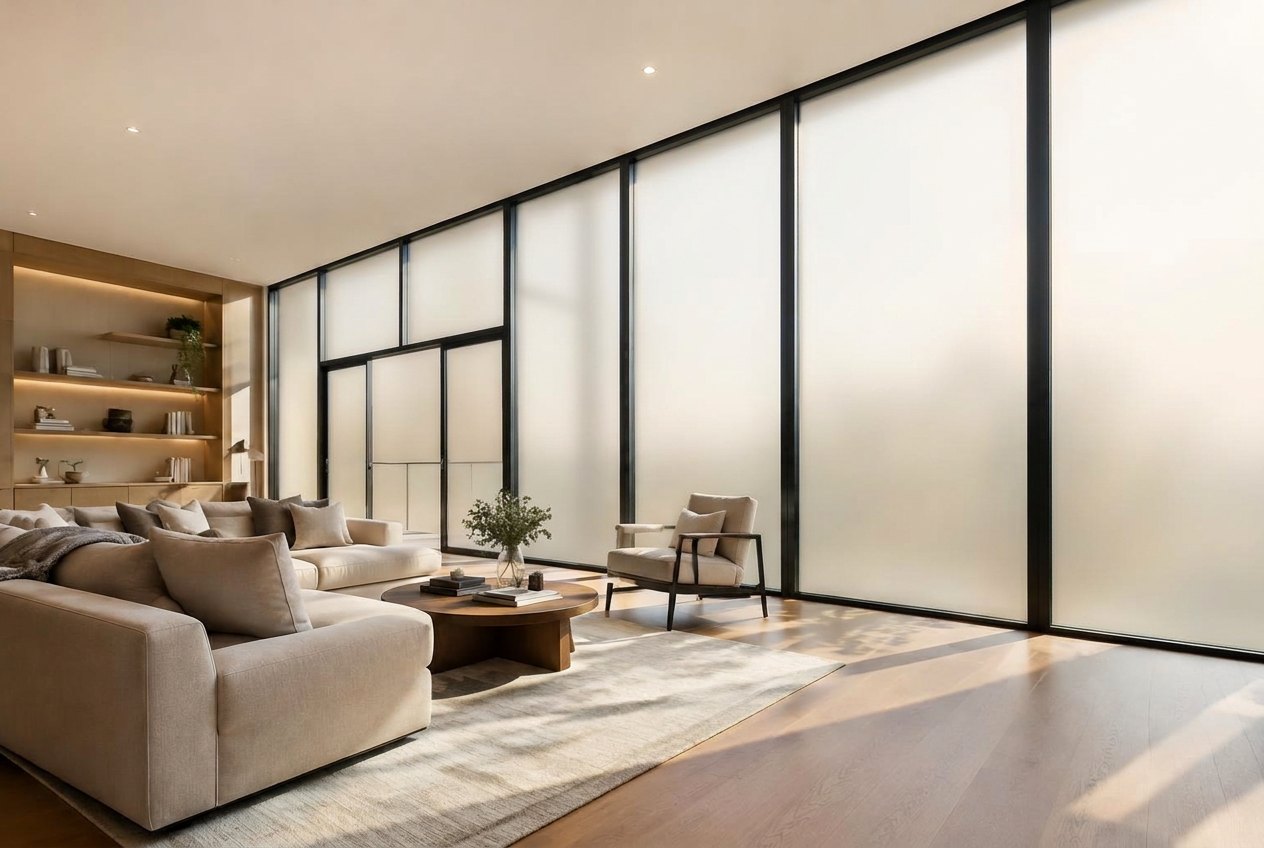
How Daylight Passes Through Smart Glass
Can windows bring daylight inside while preserving privacy? It's a common question when considering switchable glass, also known as PDLC (Polymer Dispersed Liquid Crystal) glass. The technology offers architects and interior designers another way to control visibility and natural light. Smart Glass San Francisco explores how light passes through it and what that means for a space.
How PDLC Adjusts Visibility
PDLC smart glass relies on Polymer Dispersed Liquid Crystals. An electrical current changes the way the crystals control transparency, letting the glazing switch from clear to opaque. This capability gives users a practical means of adjusting privacy and visibility.
Selecting Privacy or Openness
Spaces needn't be permanently exposed to view or constantly screened. Smart glass lets occupants choose transparency for an open view or an opaque setting for privacy. One surface can meet different needs as the room's use changes.
Putting Available Daylight to Use
Smart glass allows daylight to enter, helping spaces benefit from natural illumination. Access to daylight supports well-being and productivity and has been linked to improved mood, energy levels, and satisfaction with a space. In Bay Area interiors, the aim is to make good use of available daylight.
Tailoring Light to Individual Preferences
Adjustable smart glass transparency gives users flexibility over light in their surroundings. Instead of relying on a fixed setting, they can adapt transmission to their preferences. This control helps create a comfortable atmosphere for whatever activity is underway.
Supporting Energy-Conscious Architecture
Making effective use of daylight reduces the need for artificial lighting. By helping spaces use natural light, smart glass can lower lighting energy consumption. That makes it a useful option for green architecture and energy-efficient design strategies.
Applications for Switchable Glazing
In homes and commercial spaces alike, smart glass can preserve daylight while managing views. Residential uses prioritize privacy without sacrificing natural light, while commercial applications can make interiors more adaptable and engaging. Offices in SoMa, hotels, and healthcare facilities are among the San Francisco settings that can benefit from these qualities.
Factors Affecting Light Transmission
Smart glass light transmission varies with its tint, chosen controls, and outdoor conditions. Knowing how these factors work together helps users select appropriate light levels. As sunlight shifts, settings can be adapted to the room instead of assuming illumination stays the same.
Advances in Glazing Technology
Smart glass technology continues to evolve. Electrochromic glass, for example, offers other ways to regulate light transmission. Future technical progress is expected to expand both the range of controls and the applications for smart glass in buildings.
Bringing Privacy and Light Together
Smart glass makes it possible to combine natural light with adjustable privacy. By switching from transparent to opaque, occupants can shape their surroundings, while effective daylight use supports well-being, productivity, and reduced lighting energy demand. For San Francisco design projects, these benefits link everyday functionality with sustainable design. Ongoing technological advances will broaden how buildings and occupants interact with light.