
What sets smart glass apart from smart film?
To decide between smart glass and smart film, it helps to understand their materials and how they work. Both are smart building products, but they are not the same. This guide explains the differences San Francisco homeowners and office planners can consider before buying.
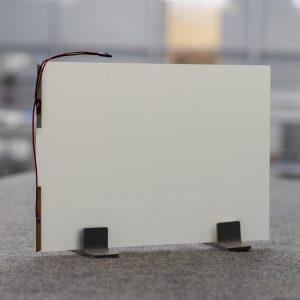
Construction: Switchable privacy glass changes quickly from clear to opaque using a wall switch or remote. Liquid crystal molecules are positioned between two layers of glass; the source says they align to block light when powered and return to clear when power is removed. Smart film, by contrast, is a thin, flexible polymer layer containing an electrical-wire network connected to a power source. The film is transparent when powered and opaque when unpowered.
Operating principle: Both options use PDLC (Polymer Dispersed Liquid Crystal) technology, which holds liquid crystals within a transparent film. Electrical energy rearranges the crystals to control how the panel looks. The source says applied voltage scatters the crystals and darkens the glass or film, while removing voltage lets the crystals realign and makes it clear. This electrical response allows a window or panel to switch between transparent and non-transparent states as needed.
Practical benefits: Both options provide privacy, convenience, and control. Smart glass changes between transparent and opaque at the press of a button, which can be useful when a shared commercial room requires different levels of privacy. Frame designs and finishes are also available to complement the interior. Smart tint film is described as a less expensive alternative that is easier to install and offers slightly greater privacy by adjusting its tint to block light from different angles. The source also says smart tint film operates without power or electrical wiring, unlike the powered PDLC film described above.
Choosing for your space: Switchable glass and PDLC film offer adjustable transparency for home interiors and exteriors, supporting privacy, energy efficiency, and a contemporary look. Bedrooms, bathrooms, and home offices are places where light and privacy control may be useful. Whether planning a Palo Alto home office or updating a San Francisco business, durability and flexibility make these materials worth considering as a property improvement.